Show Times
Tuesday 27, October
Wednesday 28, October
Thursday 29, October
Friday 30, October
Saturday 31, October
Sunday 1, November
Monday 2, November
Tuesday 3, November
Wednesday 4, November

Thursday 5, November
Friday 6, November
Saturday 7, November
Sunday 8, November
Tuesday 10, November
Saturday 14, November
Sunday 15, November
Friday 20, November
Friday 27, November
Sunday 6, December
Alien
Rfor sci-fi violence/gore and language
After a space merchant vessel perceives an unknown transmission as a distress call, its landing on the source moon finds one of the crew attacked by a mysterious life-form, and they soon realize that its life cycle has merely begun.

Aliens
Rfor monster violence, and for language
Ellen Ripley is rescued by a deep salvage team after being hypersleep for 57 years. The moon that the Nostromo visited has been colonized, but contact is lost. This time, colonial marines have impressive firepower, but will that be enough?
An Evening with Jane Schoenbrun
PG-13for violent content, some sexual material, thematic elements and teen smoking.
Join us for a special evening with acclaimed filmmaker and writer Jane Schoenbrun celebrating the release of their debut novel, Public Access Afterworld—a mesmerizing mash-up of speculative fiction, horror, conspiracy, and our increasingly strange relationship with screens. Schoenbrun will join us for a moderated conversation about the book and their work, followed by a screening of their acclaimed film I Saw the TV Glow. Spanning decades and realities, Public Access Afterworld follows a group of outsiders drawn into the mystery of a strange pirate television network broadcasting from somewhere beyond the static. Darkly funny, unsettling, and deeply human, the novel expands on the obsessions with media, identity, and alternate realities that run through Schoenbrun’s films. Ticket includes a copy of Public Access Afterworld. Additional books will be available for purchase at the event.
Ashes and Diamonds
On the last day of World War II in a small town somewhere in Poland, Polish exiles of war and the occupying Soviet forces confront the beginning of a new day and a new Poland. In this incendiary environment we find Home Army soldier Maciek Chelmicki, who has been ordered to assassinate an incoming commissar. But a mistake stalls his progress and leads him to Krystyna, a beautiful barmaid who gives him a glimpse of what his life could be. Gorgeously photographed and brilliantly performed, Ashes and Diamonds masterfully interweaves the fate of a nation with that of one man, resulting in one of the most important Polish films of all time.
Birds of War
TBC
By turning the camera on themselves, the co-directors follow the arc of their own love story as the vehicle for a deeply moving narrative about the complexity of revolution and war. This film showcases the power of journalism through emotion and vulnerability; enduring, bearing witness, and telling one’s own story oftentimes has the most impact. Spanning 13 years of revolution, war and exile, from besieged Aleppo to the confines of a London newsroom, Lebanese journalist Janay Boulos and Syrian activist and cameraman Abd Alkader Habak relive their war reporting and their unexpected love story, using a vast personal trove of archives.
Blade Runner: The Final Cut
Rfor violence
Visually spectacular, intensely action-packed and powerfully prophetic since its debut, Blade Runner returns in Ridley Scott's definitive Final Cut, including extended scenes and never-before-seen special effects. In a signature role as 21st-century detective Rick Deckard, Harrison Ford brings his masculine-yet-vulnerable presence to this stylish noir thriller. In a future of high-tech possibility soured by urban and social decay, Deckard hunts for fugitive, murderous replicants—and is drawn to a mystery woman whose secrets may undermine his soul. This incredible version features the definitive Final Cut of Ridley Scott's legendary sci-fi classic.
Cameron Winter at Carnegie Hall
TBC
Paul Thomas Anderson captures Brooklyn musician Cameron Winter's minimalist performance in this striking concert film, blending intimate close-ups with sweeping shots of the vast venue, all shot on 16mm and 35mm film.
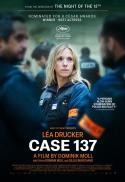
Case 137
Following the Yellow Vest protests of Paris in 2018, internal affairs officer Stéphanie Bertrand must investigate the conduct of her fellow police officers during the demonstrations. Though striving to remain objective, Stéphanie’s position leaves her at stark odds with the rest of the police force. When she scrutinizes the near-fatal assault of a teenage protester from her hometown, Stéphanie is met with growing institutional pressure to drop the case and move on. The further her investigation develops, the more Stéphanie’s faith in the system she belongs to is tested. From Dominik Moll, the award-winning French director of The Night of the 12th, comes his latest procedural — “a piercing slow-burn examination of police brutality” (The Hollywood Reporter) led by the “marvelous” (Screen Daily) Léa Drucker in a César-winning role for Best Actress. Timely and socially resonant, Case 137 is a tautly constructed study of institutional violence which asks charged questions about corruption and accountability in the criminal justice system.

Counsellor at Law
Part of our series Wild, Weird, Wicked: Films From Before the Code! Directed by the illustrious William Wyler (The Good Fairy, Detective Story, The Big Country, Ben-Hur), the briskly paced Counsellor at Law is often cited as the best film to ever tackle the intricacies and pitfalls of the legal profession. George Simon (Hollywood legend John Barrymore, Dr. Jekyll and Mr. Hyde) is a successful attorney, climbing from a Jewish ghetto to elegant Art Deco offices in the Empire State Building. After allowing one of his former clients to commit perjury to win a case, George realizes he could be disbarred. Flavored with social commentary and wry humor, Counsellor at Law is an exceptional example of the hard-boiled dramas that defined the Pre-Code cinema of the early 1930s.
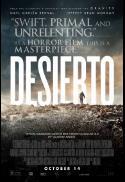
Desierto
Rfor strong violence and language
What begins as a hopeful journey to seek a better life becomes a harrowing and primal fight for survival when a deranged, rifle-toting vigilante chases a group of unarmed men and women through the treacherous U.S.-Mexican border. In the harsh, unforgiving desert terrain, the odds are stacked firmly against them as they continuously discover there's nowhere to hide from the unrelenting, merciless killer.
Fatherland
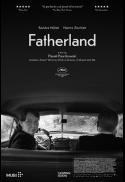
FATHERLAND centres on the relationship between the Nobel Prize-winning writer Thomas Mann (Hanns Zischler) and his daughter Erika (Sandra Hüller) - actress, writer and rally driver. In the summer of 1949, at the height of the Cold War, father and daughter embark on a challenging and emotional road trip in a black Buick taking them across a Germany in ruins - from US dominated Frankfurt to Soviet controlled Weimar. Returning home after sixteen years of exile in the US, Thomas Mann has to face not only a divided fatherland, but also a deep fracture within his own family. With FATHERLAND, director Paweł Pawlikowski picks up where he left off with his award-winning IDA and COLD WAR, exploring – in his elliptic, distilled style - the themes of identity, family, love and guilt amid the turmoil and confusion of post-war Europe.
Filipiñana
TBC
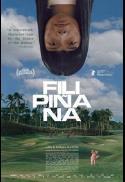
Amid stifling heat and pervasive drought, Isabel (Jorrybell Agoto), a 17-year-old Ilokana from the rural north, works at a posh country club outside Manila, lining up golf balls for powerful men to drive into the verdant horizon. New to the job, she wanders the immaculate grounds sampling its luxuries as members, including an industrialist and his expatriate niece, the club president and his pampered wife, and a slew of Chinese tourists, engage in a complex dance with the club’s doting and subservient staff. But something is rotting beneath the pristine fairways of the elite resort, as Isabel discovers when she tries to return a mislaid golf club to its patriarchal director, Dr. Palanca (Teroy Guzman). The deeper she journeys into its most exclusive corners, the closer she gets to the violent truths of the club, her native Philippines, and her own past..
Fjord
Rfor language, full nudity and self-injury.
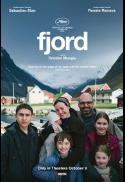
Mihai and Lisbet Gheorghiu, a Romanian-Norwegian Pentecostal couple, move with their five children from Romania to Norway after Mihai’s parents die, seeking closeness to Lisbet’s family, who share their faith. Settling in an isolated coastal village, they form a bond with their neighbors, the Halbergs. When their daughter Elia appears at school with bruises, suspicions arise about the family's strict religious upbringing. Fjord explores clashing worldviews, conformity, tolerance, and the boundaries of freedom and intimacy.
How to Clean a House in 10 Easy Steps
TBC
Beatriz Valencia, a domestic worker in the U.S. and Carolina, her daughter-filmmaker, collaborate to create the fictional character of a writer. Together, mother and daughter capture the slippage between truth and fantasy, in a hybrid documentary that tells a story about immigration, labor, dreams and the power of fiction to spark emancipation.
Hunting Flies + Roly Poly
Hunting Flies: Wlodek is a shy man who's afraid of his mother as well as his wife. However, upon meeting Irena, his life takes a new turn. Roly Poly: The story of a racing car driver who undergoes so many transplants that it can no longer be determined which people have contributed to his make-up.
Johnny Mnemonic
Rfor strong sci-fi violence, and for language
BLACK & WHITE VERSION In the 21st century, the information superhighway has developed so far that cyberspace is the norm for all business and personal dealings. Information has become so important that to shield the most delicate files from cyberspace hackers, the data is transported in the heads of Mnemonic couriers. Johnny (Keanu Reeves) is the best of the bunch, but this time the raw data he carries is so sensitive that he is being pursued by many interested parties, and his failure to deliver the information will hand him the ultimate lateness penalty.

La Bola Negra
Rfor violence/bloody images, graphic nudity, sexual content and language.
Explores what it means to be gay throughout different eras, focusing on "three existences" that are connected through themes of sexuality, desire, pain, and inheritance.
Lady
NR
Lady is an off-beat comedy about a lonely, narcissistic aristocrat who dupes a struggling, opportunistic director into filming her every move. But her obsession with the spotlight takes a surreal turn when she starts becoming… invisible. Blending mockumentary and magical realism, Lady satirises our desperate need to feel seen.
Los conductos
Medellín, Colombia. Pinky is on the run. He has just freed himself from the grip of a religious sect. He finds a place to squat and a job in a tee-shirt factory. Misled by his own faith, he questions everything. But as he tries to put back together the pieces of his broken life, violent memories return to haunt him and ask for Revenge. Winner of the Best First Feature prize at the 2020 Berlin Film Festival.

Los Domingos
Ainara is seventeen, brilliant, and expected to choose a university degree. Instead, she makes a choice no one saw coming: she feels called to God and is considering life as a cloistered nun. Her announcement stuns her family, opens a deep rift between them, and forces each of them to question what they believe and what they want for her. Winner of the Golden Shell at San Sebastián and the Goya for Best Film.
Making Marie Antoinette
Follows filmmaker Eleanor Coppola's behind-the-scenes documentation of her daughter Sofia Coppola directing the 2006 film Marie Antoinette, capturing the craftsmanship and challenges of being a young female director.

Marie Antoinette
PG-13for sexual content, partial nudity and innuendo
The retelling of France's iconic but ill-fated queen, Marie Antoinette. From her betrothal and marriage to Louis XVI at 15 to her reign as queen at 19 and to the end of her reign as queen, and ultimately the fall of Versailles.
NAZA
TBC
In secret conversations on the rooftops of Tel Aviv at night, the systems behind Israel’s calculated mass killing of Palestinian civilians in Gaza are revealed by the people who designed and operated them.
Once Upon a Time in Harlem
PG-13for some disturbing images, strong racial language, smoking, and brief partial nudity.
A decade after his death, genre-defying filmmaker William Greaves has one last trick up his sleeve with what he considered the most important event he captured on film: a 1972 party he engineered with the living luminaries of the Harlem Renaissance. For four hours, this extraordinary group – many of whom had not seen each other in fifty years – reminisced, critiqued, argued, laughed and drank while wrestling with their place in a rapidly shifting cultural landscape. Shot on 16mm film, newly restored and now directed by Greaves’ son David, this landmark film is at once a self-exploration and an inquiry into the heart of the critical mass of energy called the Harlem Renaissance. William Greaves’ intent was not only to document these artists and intellectuals as they spoke about their lives and work but also to plumb the meaning of the extraordinary creative period in which they lived to help us better understand how culture has been passed on from one generation to another and the role that the artist plays in keeping it alive.
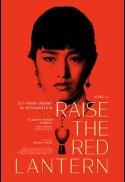
Raise The Red Lantern (35th Anniversary 4K Restora
PG
Nineteen-year-old Songlian, a promising student whose family has been destroyed by her father's death, is forced to abandon her studies and marry into wealth, becoming the fourth and newest concubine of the aging, unseen Master Chen. Inside his walled estate, she discovers a household ruled by a merciless ritual: each night, red lanterns are lit outside the chambers of whichever wife the master chooses to visit, granting her privilege and status while the others are cast into cold irrelevance. Songlian is drawn into the orbit of her rivals, each shaped by years of fighting for the same scraps of attention. Determined at first to rise above the games, Songlian is gradually worn down by isolation and humiliation until she strikes back, trading secrets and favors to secure her place in Master Chen’s hierarchy. As petty cruelty turns even more dire, Songlian is forced to confront what these desperate measures will cost her soul. “As visually striking as it is dramatically effective,” Zhang Yimou’s Academy Award-nominated Raise the Red Lantern sumptuously captures 1920s China while “subtly exploring the politics of power and control” (Janet Maslin, The New York Times). One of international cinema’s greatest stars of the era, Gong Li is “nuanced and understated” (Chicago Reader) as the stifled young woman forced into a repressive world of concubinage. Newly restored, the film stands as one of the defining works of Fifth Generation Chinese cinema and international film of the 1990s. The 4K restoration of Raise the Red Lantern was carried out by the Udine Far East Film Festival on the occasion of its 26th edition. The original image and sound negatives were used under the supervision of Director Zhang Yimou. The vintage positive copy, presented at the 1991 Venice International Film Festival and preserved at the Venice Biennale's Historical Archive of Contemporary Arts, was used for color reference. The restoration was made in 2024 at L'Immagine Ritrovata (Hong Kong - Bologna).
Rock Ross: Go Like This
TBC
Rock Ross: Go Like This surveys 20 years of the filmmaker’s “frivolous and socially irresponsible films” (The Athens News), bringing together 16mm prints and camera originals from the Academy Film Archive and Canyon Cinema collections. Highlights include Ross’s ode to surf culture, Sosueme (1988); the “cruelty free” Mothlight parody Baglight (1996), in which no critters were harmed; the eponymous Go Like This, an adrenalized nocturnal foray through the streets of San Francisco; the frenzied goddess film Exclaim Her Limitless Wisdom (1984); and the playful scratch animation Psycho Porpoise (2002). The program concludes with Ross’s Stupor Mundi (1996), an allegorical homage to silent films, with live piano accompaniment by Will Lewis. With special thanks to Mark Toscano and the Academy Film Archive. Stupor Mundi still courtesy of Walker Art Center.
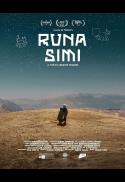
Runa Simi
Fernando Valencia, a 29-year-old voice artist from Cusco, Peru, is an Indigenous activist, painter, and devoted single father. Known for his uncanny ability to voice multiple characters, he launched Quechua Clips—a viral project that reimagines iconic animated scenes in Quechua, the ancestral language of the Incas, also known as Runa Simi. The response was overwhelming: millions of Quechua speakers hungry for stories in their own language. Fueled by this groundswell of support, Fernando sets his sights on an ambitious and quixotic dream—to dub Disney’s 1994 classic The Lion King into Quechua, with the help of his spirited eight-year-old son, Dylan. Armed with a homemade studio and relentless resolve, Fernando navigates countless ups and downs, facing rejection, setbacks, and self-doubt. Yet through it all, his determination never wavers, turning his personal mission into a powerful call for language justice and cultural reclamation.

Séance
TBC
In 1892 California, a woman contemplating adultery is forced to take refuge from a storm at the home of her first husband and his unstable wife, who claims to be haunted by their dead child. Novelist Emma Strand (Scottie Thompson) is on vacation at the seaside in 1892 California with her second husband Albert (Connor Paolo) when she encounters her first husband George (Jilon VanOver) and his mentally unstable new wife, Lillian (Vivian Kerr). Emma and Albert take refuge from a sudden storm at George and Lillian's mansion. Over the course of the evening, Emma must confront her unhappiness in her marriage, the temptation of adultery, and the disturbing possibility the house is haunted by George and Lillian's recently drowned daughter Hazel.
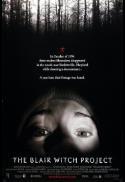
The Blair Witch Project
Rfor language
Three film students travel to Maryland to make a student film about a local urban legend... The Blair Witch. The three went into the woods on a two day hike to find the Blair Witch, and never came back. One year later, the students film and video were found in the woods. The footage was compiled and made into a movie. The Blair Witch Project.
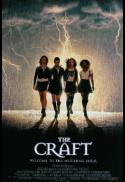
The Craft
Rfor some terror and violence, and for brief language
A newcomer to a Catholic prep high school falls in with a trio of outcast teenage girls who practice witchcraft and they all soon conjure up various spells and curses against those who even slightly anger them.
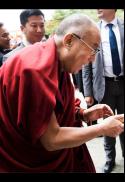
The Dalai Lama: My Religion is Kindness
In Person: Director Babeth Mondini-VanLoo and Special Guest This new film offers a unique, intimate, and wide-ranging view of the 14th Dalai Lama through his longterm engagement with the people of The Netherlands including members of the royal family and leading artists and intellectuals. The Dalai Lama’s powerful message of inner peace and his concern for the planet and universal connectedness are inspiring antidotes for a world full of challenges, polarization, and war. Featuring Tenzin Gyatso-the 14th Dalai Lama, Richard Gere, Ani Jinpa, the Princess of Orange, Tsering Jampa, David Bohm, and others.
The History of Concrete
NR
A filmmaker applies lessons from a Hallmark movie writing workshop to pitch a documentary about concrete.
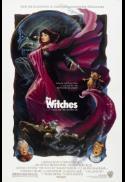

Welcome II The Terrordome
TBC
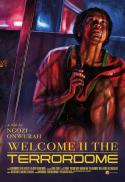
Ngozi Onwurah’s radically ahead-of-its-time Afrofuturist vision WELCOME II THE TERRORDOME made history as the first theatrically distributed British feature directed by a Black woman. Nevertheless, it was largely dismissed upon its release by critics unable to see the urgency in its evocation of a gritty dystopia in which Black people have been relegated to living in a slum called the Terrordome, where simmering racial tension threatens to boil over in the wake of a young boy’s death. Over thirty years later, Onwurah’s fusion of political commentary and genre spectacle looks positively prescient, and her ability to build an entire cosmology that connects the history of slavery to present-day police brutality is nothing less than visionary.
When ICE Melts
TBC
About the heroic resistance to Operation Metro Surge by the people of Minnesota. This feature-length documentary includes interviews with organizers and community leaders involved in the resistance to ICE in the Twin Cities and firsthand footage of the resistance in the streets and the January 23 mass strike, showing the enormous power of the working class. When ICE Melts examines how ordinary people organized across neighborhoods, workplaces, unions, and communities to resist repression and build collective power. It draws out strategic lessons from those experiences, including the decisive role of the January 23 mass strike in defeating ICE. Designed for community organizations, unions, classrooms, and activists, When ICE Melts explores what it takes to build the relationships, democratic structures, and solidarity necessary to confront rising authoritarianism. Rather than simply documenting a historic moment, the film serves as a resource for people in other cities who are preparing to organize, strengthen their communities, and join a growing movement for collective action against authoritarianism.
Wild at Heart
TBC
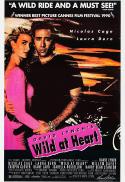
Sailor and Lula are two lovers struggling to remain together even when fate seems intent on keeping them apart. In this case, fate is Lula's mother, Marietta Fortune; a desperate woman who hates Sailor and will do anything to keep him away from her daughter. After Sailor is released from prison for murdering a man in self-defence, he and Lula embark on a sex-filled, rocking road trip, aware all the time that they are being hunted by Marietta's cronies.