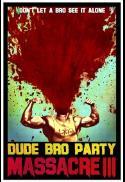
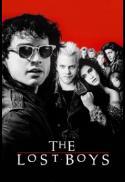
In the wake of two back-to-back mass murders on Chico's frat row, loner Brent Chirino must infiltrate the ranks of a popular fraternity to investigate his twin brother's murder at the hands of the serial killer known as "Motherface." Please join us for a post-screening filmmaker panel Q&A with director Michael Rousselet and several cast and crew members.

R
JOIN US at "Camp Blood" for the 40th Anniversary Screening of Friday the 13th Part VI: Jason Lives on Friday, September 4, from 7:30-11 PM. Come celebrate this fan-favorite, as Tommy Jarvis unwittingly resurrects JASON and fights to send the slasher back to Hell - once and for all! Following Jason Lives, Writer/Director Tom McLoughlin will appear for an in-person Q&A at 9:00 PM, with a special screening of his 1982 supernatural horror feature One Dark Night at 9:30 PM. INCLUDED with this Double-Feature Screening Event is an incredibly RARE Photo Opportunity with Tommy's Screen-Used "Jason Voorhees" Tombstone from Jason Lives! EXCLUSIVE 11"x17" full-color Event Poster available for purchase ONLY at the event (with proof of entry). Additional Cast TBA. Don't miss it, or you're dead meat! Hosted by Brandon Oliver & Kellen Pembleton
NR
Following a long absence from the big screen, Gamera made a triumphant return to form in time for his 30th anniversary, with upgraded special effects and a more serious tone. Now a guardian deity, Gamera tussles with a new incarnation of his old foe — the flying monster Gyaos — first in Fukuoka, and then in a spectacular aerial battle over Tokyo.
TBC
Dirs. Shi Jian, Wang Guangli. 1992. China. 93 min. In Mandarin with English subtitles. Made independently in 1992, I Have Graduated turns to a generation of university students whose college years coincided with the upheavals of the late 1980s and the 1989 student movement. Following graduating seniors at universities across Beijing as they prepare to leave campus, the film records candid conversations about friendship, love, careers, family expectations, studying abroad, and their enduring traumatic memories of June 4, 1989. The historical circumstances remain an important presence in these conversations, even when they are not their explicit subject. By 1992, the political idealism associated with the 1980s had given way to a different national atmosphere, while renewed economic reforms opened up new possibilities—and new pressures—for young Chinese entering adulthood. More than thirty years later, I Have Graduated offers a remarkably intimate portrait of this generational transition. Its students stand at the intersection of two eras: shaped by the intellectual and political currents of the 1980s, yet preparing to enter the increasingly market-oriented China that would emerge during the 1990s, and that endures today. Ordinary Lives in Extraordinary Times: Chinses Documentaries of the 1980s and 1990s. Saturday, September 12 11 am (Intro) Only One Earth 只有一个地球 (81 min.) 1 pm (Intro) Notes from Beijing 京城散记 (175 min.) 4:30 pm (Intro) Reform School Students 工读生 (142 min.) 8 pm (Intro) I Have Graduated 我毕业了 (92 min.) Sunday, September 13 3 pm (Intro) Tiananmen 天安门, pts. 1 – 4 (210 min.) 7 pm Tiananmen 天安门, pts. 5 – 8 (204 min.) Chinese Documentaries of the 1980s and 90s made by a small group of filmmakers working within China Central Television (CCTV) and Beijing Television (BTV) who began experimenting with a radically different approaches to documentary cinema. Calling their group Structure, Wave, Youth, Cinema (SWYC), Shi Jian (时间), Wang Zijun (王子军), Kuang Yang (邝杨), and Chen Jue (陈爵) turned their cameras away from the expository conventions and official narratives that had long characterized Chinese television documentary. Instead, they sought out individual lives and experiences: students confronting uncertain futures, migrant workers navigating the capital, artists and musicians participating in an emerging cultural avant-garde, elderly Beijingers recalling a disappearing city, and young people living at the margins of society. The late 1980s and early 1990s marked one of the most consequential periods of social, political, and cultural transformation in the history of the People’s Republic of China. A decade of reform and opening had dramatically altered the country’s economic and intellectual landscape, bringing increased engagement with the outside world, an expanding sphere of cultural experimentation, and intense debates over China’s political and social future. These transformations culminated in the nationwide protest movement of 1989, after which Chinese society entered a markedly different political and cultural environment. Economic transformation soon accelerated with the deepening of market reforms, even as the possibilities for political liberalization were sharply curtailed. SWYC occupied a crucial position within this transitional period. Working at the boundary between state television and emerging independent practice, its members produced some of the defining documentaries of their generation (largely unseen and unheralded) and helped lay the foundation for what would become known as China’s New Documentary Film Movement. Viewed together, more than three decades since the inception of their group, SWYC’s films offer both an important genealogy of New Documentary Cinema in China and an unusually intimate historical record of a society undergoing profound change. Many of these works have rarely been screened before this year. This traveling retrospective brings together SWYC’s major documentaries, allowing audiences to encounter a formative chapter of Chinese nonfiction cinema while seeing the late 1980s and early 1990s through the lives, conversations, spaces, and uncertainties of the people who experienced them. This is a truly special 2-day event in which these documentary films rarely screened anywhere will be shown in Gardena Cinema hosted by film critic and programmer Sam C. Mac and by UCLA Center for Chinese Studies.
PG
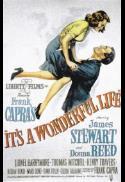
Beset with personal and professional problems, George Bailey finds his previously happy life falling apart around him on Christmas Eve. Seeing no way out, George considers suicide from the edge of a bridge - but Clarence, his guardian angel, intervenes and shows George what his beloved hometown of Bedford Falls would be like without him. Shocked by what he sees and at the unforeseen circumstances of his absence, George reconsiders and begs Clarence to return him to the problems of the present and the loving community he has fostered throughout his life.
Welcome to K-Town International Film Festival. ONE DAY - VIP ALL ACCESS FOR ONE PERSON $40 (Saturday Only) - One All-Access VIP Pass for film screenings - One VIP admission to Awards Show - VIP Reception for one person - Priority seating and access - VIP Red Carpet access - VIP badge ONE DAY GENERAL ADMISSION PASS FOR ONE PERSON $20 (Saturday or Sunday) - One General Admission Pass for film screenings - One admission to Awards Show - General seating - Red Carpet access deferred to VIP TWO DAY - VIP ALL ACCESS FOR ONE PERSON $60 (All Access to All Venues) - One All-Access VIP Pass for film screenings at both Gardena Cinema and Regency Theater in Koreatown - One VIP Admission to Awards Show on Saturday at Gardena Cinema - One VIP Admission to the VIP reception - Priority red carpet access - Priority seating and access - Access to all screenings, panels, awards, and special programs - One VIP badge - Commemorative photograph with festival leaders or honorees
Welcome to the dark heart of the weekend. Explore three highly calculated tracks of independent feature film premieres, specialized filmmaker panels, live red carpet receptions, and brutal, themed shorts blocks meticulously cataloged from afternoon arrival flows to late-night afterparties. 12:30 PM SCREEN SHOCK (PART 1) SHORTS BLOCK SHORTS 1. Dry January (19:00) 2. Pleased to Kill You (13:30) 3. Pandora, Inc. (11:45) 4. Enseñame Como Morir (14:05) 5. The Model Reality (8:00) 6. DRONE (17:12) 7. Only Space and Time (5:00) BLOCK RUNTIME: 1h 20m 32s. OPENS THE WEEKEND WITH DARK VISIONS OF PARANOIA, TECHNO-PANIC, AND DEADLY OBSESSION. 2:20 PM INDUSTRY PANEL & SPECIAL EVENT: HORROR WRITERS ASSOCIATION SPECIAL EVENT AN EXCLUSIVE INTERACTIVE PANEL SESSION HOSTED BETWEEN THE FRIDAY SHORTS BLOCKS. 3:00 PM SCREEN SHOCK (PART 2) SHORTS BLOCK SHORTS 1. All You Need (12:05) 2. Simon Says So (20:00) 3. Midnight Movie Club (4:28) 4. Into the Static (6:26) 5. Haiku 27 (14:30) BLOCK RUNTIME: 1h 01m 01s. DIGITAL ANOMALIES AND REALITY DISTORTIONS PUSH THE LIMITS OF MODERN CYBER-HORROR. 4:00 PM OFFICIAL RED CARPET GALA RED CARPET WELCOMING FILMMAKERS, VIP GUESTS, AND PRESS. FULL ONE-HOUR MEDIA RUNWAY AMID THE PEAK FRIDAY EVENING ARRIVAL FRAME. 5:00 PM FEATURE 1: Lenore (1h 28m) + Q&A FEATURE TOTAL RUNTIME: ~1h 40m WITH SEATING & Q&A. A SLEEK MODERN THRILLER DEALING WITH MISSING INTERNET INFLUENCERS ANCHORS THE POST-CARPET BLOCK. 6:45 PM INTERMISSION & SEATING RESET A 15-MINUTE BREATHING BUFFER FOR AUDIENCE INTERMISSION FLOWS AND THEMED MID-EVENING RESET. 7:00 PM "TOO TIGHT TO MOVE" WORLD PREMIERE & Q&A SPECIAL PRESENTATION TOTAL RUNTIME: 25m 00s. THE SHORT FILM PREMIERE FROM THE WINCHESTER BROTHERS. INCLUDES AN INTRODUCTION HOST PRESENTATION AND EXTENDED FILMMAKER Q&A. 8:00 PM FEATURE 2: Demonetize (1h 30m) + Q&A FEATURE TOTAL RUNTIME: ~1h 45m WITH Q&A. LATE NIGHT STAR MAGNET. DOUG JONES AND MATTY CARDAROPLE LEAD AN ONLINE HORROR NIGHTMARE. 10:00 PM AFTERPARTY @ TBD SPECIAL EVENT LATE NIGHT MIXER FOR ALL PASS HOLDERS AND FILMMAKERS FOLLOWING THE MARQUEE FEATURE BLOCKS.
Welcome to the dark heart of the weekend. Explore three highly calculated tracks of independent feature film premieres, specialized filmmaker panels, live red carpet receptions, and brutal, themed shorts blocks meticulously cataloged from afternoon arrival flows to late-night afterparties. BLOODRUSH Block DAY 2: SATURDAY THEME: A BLOODY MOTHERF*CKING MESS Presented by Dread Central 12:30 PM BLOODRUSH (PART 1) SHORTS BLOCK SHORTS 1. Grizzly Peak (13:50) 2. Glory Hole (15:00) 3. The Screaming (9:00) 4. Mystic Stylez (14:01) 5. RAGE (12:14) 6. The Date (7:30) 7. Excisions (25:00) BLOCK RUNTIME: 1h 39m 58s. VISCERAL SURVIVAL SCENARIOS MAXIMIZING AFTERNOON AUDIENCE FLOWS. 2:30 PM TV PILOT SPOTLIGHT: PUKE BITCH + Q&A (35m) EPISODIC PREMIERE A HIGH-OCTANE 35-MINUTE TELEVISION PILOT PREMIERE FLOWING DIRECTLY OUT OF THE AFTERNOON SHORTS BLOCK WITH A Q&A. 3:30 PM BLOODRUSH (PART 2) SHORTS BLOCK SHORTS 1. Who Goes There? (18:53) 2. We'll Still Be Here (23:53) 3. Rave (13:21) 4. COW (22:50) BLOCK RUNTIME: 1h 15m 34s. UNRELENTING GRINDHOUSE GRIT, FERAL MONSTERS, AND RAVE-INDUCED TERROR. 4:45 PM OFFICIAL RED CARPET GALA RED CARPET SPECIAL EVENING RED CARPET SHOWCASE AND PRE-FEATURE NETWORKING INTERMISSION. 5:30 PM FEATURE 1: Looky-Loo: Part II + Q&A FEATURE TOTAL RUNTIME: ~1h 45m WITH Q&A. MAIN EVENT EVENING SLOT RESUMING SCREENINGS IMMEDIATELY POST-CARPET RECEPTION. 7:30 PM MUSIC VIDEO SPOTLIGHT - THROWLIGHT: MONSTER + Q&A (6m) MUSIC VIDEO RUN TIME: 6m 00s. A VISUAL EXPERIMENT OPENING UP THE GRINDHOUSE MAIN EVENT FEATURE. Starring LeeAnna Vamp, Gigi Gustin, Chelsea Cook, and Michelle Dee. 7:45 PM REGROUP & RESET A 30-MINUTE INTERMISSION TO RESET THE AUDIENCE ENVELOPE AND PREPARE FOR THE SATURDAY FINALE ARRIVAL FRAME. 8:15 PM FEATURE 2: Hollow Girls (1h 27m) + Q&A FEATURE TOTAL RUNTIME: ~1h 45m WITH Q&A. THE PRIMETIME GRINDHOUSE MAIN EVENT. BRUTAL, PULSE-POUNDING SURVIVAL TERROR FROM THE CREATIVE TEAM BEHIND HUNT HER, KILL HER.
Welcome to the dark heart of the weekend. Explore three highly calculated tracks of independent feature film premieres, specialized filmmaker panels, live red carpet receptions, and brutal, themed shorts blocks meticulously cataloged from afternoon arrival flows to late-night afterparties. NIGHT TERRORS Block DAY 3: SUNDAY THEME: SUPERNATURAL DREAD & THE GRAND FINALE Presented by Absolution Brewing Co. 12:30 PM NIGHT TERRORS (PART 1) SHORTS BLOCK SHORTS 1. The Knowing (9:51) 2. Follow Me Home (10:00) 3. Rift (8:34) 4. The Feast of the Serpent (9:20) 5. Obey (11:07) 6. All Drawn Red (12:00) 7. Manifest (13:59) 8. Whisper in the Abyss (4:25) BLOCK RUNTIME: 1h 19m 16s. HAUNTING ENTITIES, DARK BLOOD RITUALS, AND UNHOLY INVOCATIONS LEAD SUNDAY'S OPENINGS. 2:00 PM FEATURE 1: INFERNUS (1h 30m) + Q&A FEATURE TOTAL RUNTIME: ~1h 45m WITH Q&A. AN EXTRA 11-MINUTE SEATING BUFFER SEPARATES THIS FROM THE PREVIOUS RUN. A GRIPPING CHRONICLE OF VISCERAL SUSPENSE. 4:00 PM NIGHT TERRORS (PART 2) SHORTS BLOCK SHORTS 1. Thin Air (15:00) 2. Grandma's Couch (15:20) 3. DRAINOMANIA (14:45) 4. Stalker (18:30) 5. The Man That Killed Boogey (18:22) 6. GUMBORO (21:00) BLOCK RUNTIME: 1h 42m 47s. PSYCHOLOGICAL BREAKDOWNS AND PARANORMAL ANOMALIES DOMINATE LATE AFTERNOON SELECTIONS. 6:00 PM OFFICIAL RED CARPET GALA RED CARPET MID-EVENING RECEPTION CELEBRATING SUNDAY'S PREMIUM WRAP-UP MOVEMENT AND PRESS SELECTIONS. 7:00 PM FEATURE 2: The Demonatrix (1h 29m) + Q&A FEATURE TOTAL RUNTIME: ~1h 45m WITH Q&A. SCORED IN THE HOLLYWOOD GOLDEN HOUR STRIP, ACCOMPANIED BY DETAILED DISCUSSION PANELS POST-SCREENING. 9:00 PM GRAND FINALE AWARDS CEREMONY SPECIAL EVENT THE ACCLAIMED CLOSING RADIUS. DISTRIBUTING FESTIVAL ACCOLADES, AUDIENCE CHOICES, AND PRODUCTION BLUEPRINTS TO LAUREATES.
TBC
Dirs. Wang Zijun, Sun Yongsheng. 1988–91. China. 175 min. In Mandarin with English subtitles. Filmed simultaneously with Tiananmen, Notes from Beijing likewise records the Chinese capital from 1988 to 1991. Yet where Tiananmen approaches Beijing expansively, Wang Zijun’s film begins from an intensely personal premise. Part memoir, part city symphony, Notes from Beijing traces the lifelong Beijinger’s path through streets and neighborhoods whose physical appearance and social character were already beginning to change. Wang weaves first-person reflections, on-the-scene interviews, archival footage, and observations of everyday life into a diaristic meditation on memory, history, and home. The result reflects a broader preoccupation among Chinese intellectuals of the period with parsing individual memory and lived experience from official narratives of history. Seen now, the film also records a Beijing poised between distinct historical moments: the cultural and intellectual opening of the 1980s, the rupture of 1989, and the accelerated redevelopment and commercialization that would reshape the capital during the following decade. Notes from Beijing transforms the city into a conversation across time, where echoes of the past continually enter contemporary life. More than an irreplaceable record of pre-redevelopment Beijing, Wang’s deeply personal work preserves a way of seeing the capital shaped by an intimate familiarity with its physical and historical landscape. Ordinary Live in Extraordinary Times: Chinese Documentaries of the 1980s and 1990s. Saturday, September 12 11 am (Intro) Only One Earth 只有一个地球 (81 min.) 1 pm (Intro) Notes from Beijing 京城散记 (175 min.) 4:30 pm (Intro) Reform School Students 工读生 (142 min.) 8 pm (Intro) I Have Graduated 我毕业了 (92 min.) Sunday, September 13 3 pm (Intro) Tiananmen 天安门, pts. 1 – 4 (210 min.) 7 pm Tiananmen 天安门, pts. 5 – 8 (204 min.) Chinese Documentaries of the 1980s and 90s made by a small group of filmmakers working within China Central Television (CCTV) and Beijing Television (BTV) who began experimenting with a radically different approaches to documentary cinema. Calling their group Structure, Wave, Youth, Cinema (SWYC), Shi Jian (时间), Wang Zijun (王子军), Kuang Yang (邝杨), and Chen Jue (陈爵) turned their cameras away from the expository conventions and official narratives that had long characterized Chinese television documentary. Instead, they sought out individual lives and experiences: students confronting uncertain futures, migrant workers navigating the capital, artists and musicians participating in an emerging cultural avant-garde, elderly Beijingers recalling a disappearing city, and young people living at the margins of society. The late 1980s and early 1990s marked one of the most consequential periods of social, political, and cultural transformation in the history of the People’s Republic of China. A decade of reform and opening had dramatically altered the country’s economic and intellectual landscape, bringing increased engagement with the outside world, an expanding sphere of cultural experimentation, and intense debates over China’s political and social future. These transformations culminated in the nationwide protest movement of 1989, after which Chinese society entered a markedly different political and cultural environment. Economic transformation soon accelerated with the deepening of market reforms, even as the possibilities for political liberalization were sharply curtailed. SWYC occupied a crucial position within this transitional period. Working at the boundary between state television and emerging independent practice, its members produced some of the defining documentaries of their generation (largely unseen and unheralded) and helped lay the foundation for what would become known as China’s New Documentary Film Movement. Viewed together, more than three decades since the inception of their group, SWYC’s films offer both an important genealogy of New Documentary Cinema in China and an unusually intimate historical record of a society undergoing profound change. Many of these works have rarely been screened before this year. This traveling retrospective brings together SWYC’s major documentaries, allowing audiences to encounter a formative chapter of Chinese nonfiction cinema while seeing the late 1980s and early 1990s through the lives, conversations, spaces, and uncertainties of the people who experienced them. This is a truly special 2-day event in which these documentary films rarely screened anywhere will be shown in Gardena Cinema hosted by film critic and programmer Sam C. Mac and by UCLA Center for Chinese Studies.
TBC
Dirs. Chen Jue, Jiu Ke. 1990. China. 81 min. In Mandarin with English subtitles. Produced for China’s first Earth Day in 1990—but never aired—Only One Earth emerged directly from the intellectual and cultural currents of the late 1980s. Environmental degradation had become an increasingly important subject among Chinese scientists, writers, and intellectuals, for whom questions of pollution, population, industrialization, and ecological destruction were often inseparable from broader debates about modernization and the direction of China’s development. Combining archival footage, poetic montage, and an unusually experimental essayistic style, the film moves between pollution, deforestation, wildlife loss, famine, and the environmental consequences of industrialization. Its global perspective also reflects the increasing international exchange of the reform era, drawing upon documentary and essay-film traditions that differed sharply from the dominant conventions of Chinese television. Completed in the aftermath of 1989, Only One Earth stands as both one of the most formally adventurous Chinese documentaries of the period and a revealing artifact of the intellectual culture from which China’s new documentary movement emerged. Environmentalism becomes not only a scientific concern, but a means of asking larger moral, cultural, and philosophical questions about modernization and humanity’s future. Ordinary Lives in Extraordinary Times: Chinese Documentaries of the 1980s and 1990s. Saturday, September 12 11 am (Intro) Only One Earth 只有一个地球 (81 min.) 1 pm (Intro) Notes from Beijing 京城散记 (175 min.) 4:30 pm (Intro) Reform School Students 工读生 (142 min.) 8 pm (Intro) I Have Graduated 我毕业了 (92 min.) Sunday, September 13 3 pm (Intro) Tiananmen 天安门, pts. 1 – 4 (210 min.) 7 pm Tiananmen 天安门, pts. 5 – 8 (204 min.) Chinese Documentaries of the 1980s and 90s made by a small group of filmmakers working within China Central Television (CCTV) and Beijing Television (BTV) who began experimenting with a radically different approaches to documentary cinema. Calling their group Structure, Wave, Youth, Cinema (SWYC), Shi Jian (时间), Wang Zijun (王子军), Kuang Yang (邝杨), and Chen Jue (陈爵) turned their cameras away from the expository conventions and official narratives that had long characterized Chinese television documentary. Instead, they sought out individual lives and experiences: students confronting uncertain futures, migrant workers navigating the capital, artists and musicians participating in an emerging cultural avant-garde, elderly Beijingers recalling a disappearing city, and young people living at the margins of society. The late 1980s and early 1990s marked one of the most consequential periods of social, political, and cultural transformation in the history of the People’s Republic of China. A decade of reform and opening had dramatically altered the country’s economic and intellectual landscape, bringing increased engagement with the outside world, an expanding sphere of cultural experimentation, and intense debates over China’s political and social future. These transformations culminated in the nationwide protest movement of 1989, after which Chinese society entered a markedly different political and cultural environment. Economic transformation soon accelerated with the deepening of market reforms, even as the possibilities for political liberalization were sharply curtailed. SWYC occupied a crucial position within this transitional period. Working at the boundary between state television and emerging independent practice, its members produced some of the defining documentaries of their generation (largely unseen and unheralded) and helped lay the foundation for what would become known as China’s New Documentary Film Movement. Viewed together, more than three decades since the inception of their group, SWYC’s films offer both an important genealogy of New Documentary Cinema in China and an unusually intimate historical record of a society undergoing profound change. Many of these works have rarely been screened before this year. This traveling retrospective brings together SWYC’s major documentaries, allowing audiences to encounter a formative chapter of Chinese nonfiction cinema while seeing the late 1980s and early 1990s through the lives, conversations, spaces, and uncertainties of the people who experienced them. This is a truly special 2-day event in which these documentary films rarely screened anywhere will be shown in Gardena Cinema hosted by film critic and programmer Sam C. Mac and by UCLA Center for Chinese Studies.
TBC
Dirs. Wang Zijun, Wang Lan. 1991–94. China. 142 min. In Mandarin with English subtitles. Filmed over four years in three Beijing reform schools, Reform School Students offers a striking portrait of young people whose lives bear the imprint of social upheavals that began long before they were born. For some of the students, family instability, economic precarity, and estrangement from their parents can be traced in part to the Cultural Revolution and its aftermath, particularly the mass relocation of urban youth to the countryside and the difficulties many encountered when attempting to rebuild their lives after returning to the cities. By the early 1990s, the children of this generation were coming of age in a radically different China, yet the consequences of their parents’ experiences during the Mao years continued to shape the circumstances in which they lived. With rare access to students, families, teachers, and administrators, filmmakers Wang Zijun and Wang Lan not only observe life inside the schools but probe the hopes, fears, family circumstances, and complicated relationships of the young people who attend them. Rather than treating students as social problems to be corrected, the film insists upon their individuality, revealing how categories of delinquency and reform can obscure complex histories of family rupture, economic hardship, and intergenerational trauma. Reform School Students also makes unusually visible a question rarely posed in Chinese documentary film: what ethical obligations accompany the filmmaker’s claim to record reality? The Wangs continually negotiate the boundaries between witness and intervention, particularly as they confront the possibility that appearing in the documentary could expose its young subjects to lasting stigma. In doing so, Reform School Students becomes a rare meditation on documentary ethics, questioning not only what a camera can reveal, but also the responsibilities that come with turning it on another person’s life. Ordinary Lives in Extraordinary Times: Chinese Documentaries of the 1980s and 1990s. Saturday, September 12 11 am (Intro) Only One Earth 只有一个地球 (81 min.) 1 pm (Intro) Notes from Beijing 京城散记 (175 min.) 4:30 pm (Intro) Reform School Students 工读生 (142 min.) 8 pm (Intro) I Have Graduated 我毕业了 (92 min.) Sunday, September 13 3 pm (Intro) Tiananmen 天安门, pts. 1 – 4 (210 min.) 7 pm Tiananmen 天安门, pts. 5 – 8 (204 min.) Chinese Documentaries of the 1980s and 90s made by a small group of filmmakers working within China Central Television (CCTV) and Beijing Television (BTV) who began experimenting with a radically different approaches to documentary cinema. Calling their group Structure, Wave, Youth, Cinema (SWYC), Shi Jian (时间), Wang Zijun (王子军), Kuang Yang (邝杨), and Chen Jue (陈爵) turned their cameras away from the expository conventions and official narratives that had long characterized Chinese television documentary. Instead, they sought out individual lives and experiences: students confronting uncertain futures, migrant workers navigating the capital, artists and musicians participating in an emerging cultural avant-garde, elderly Beijingers recalling a disappearing city, and young people living at the margins of society. The late 1980s and early 1990s marked one of the most consequential periods of social, political, and cultural transformation in the history of the People’s Republic of China. A decade of reform and opening had dramatically altered the country’s economic and intellectual landscape, bringing increased engagement with the outside world, an expanding sphere of cultural experimentation, and intense debates over China’s political and social future. These transformations culminated in the nationwide protest movement of 1989, after which Chinese society entered a markedly different political and cultural environment. Economic transformation soon accelerated with the deepening of market reforms, even as the possibilities for political liberalization were sharply curtailed. SWYC occupied a crucial position within this transitional period. Working at the boundary between state television and emerging independent practice, its members produced some of the defining documentaries of their generation (largely unseen and unheralded) and helped lay the foundation for what would become known as China’s New Documentary Film Movement. Viewed together, more than three decades since the inception of their group, SWYC’s films offer both an important genealogy of New Documentary Cinema in China and an unusually intimate historical record of a society undergoing profound change. Many of these works have rarely been screened before this year. This traveling retrospective brings together SWYC’s major documentaries, allowing audiences to encounter a formative chapter of Chinese nonfiction cinema while seeing the late 1980s and early 1990s through the lives, conversations, spaces, and uncertainties of the people who experienced them. This is a truly special 2-day event in which these documentary films rarely screened anywhere will be shown in Gardena Cinema hosted by film critic and programmer Sam C. Mac and by UCLA Center for Chinese Studies.
TBC
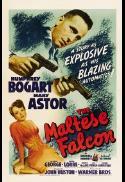
A private detective takes on a case that involves him with three eccentric criminals, a gorgeous liar, and their quest for a priceless statuette.
The Movie Screeners Club is an ongoing monthly short film festival featuring short movies made by local filmmakers every third Thursday of each month. After the last short film is shown, we have a filmmaker panel about the motivation behind making the movie and the process that was done to make it. Audience members will vote for their top 3 favorite short movies and each month we will announce the winner of the Audience Award. At the end of the year, we will feature each monthly Audience Award winner to vote for the Champion of the Year in December! Stay after the filmmaker panel concludes, join us in the lobby for a social and networking mixer.
TBC
Dirs. Shi Jian, Chen Jue. 1988–91. China. 420 min. In Mandarin with English subtitles. Originally commissioned by China Central Television (CCTV), Tiananmen began in 1988, during the final years of the extraordinary intellectual and cultural ferment that had accompanied China’s post-Mao reform era. Conceived as an expansive portrait of Beijing and its inhabitants, the project would ultimately span the political rupture of 1989 and be completed independently in 1991. Its production history thus parallels the transformation of Chinese documentary itself, as filmmakers who had begun experimenting within state television increasingly found themselves working beyond its institutional boundaries. Across its seven hours, Tiananmen presents an extraordinary range of people: elderly members of the imperial family, migrant workers, artists, students, musicians, intellectuals, and ordinary citizens. Their stories situate the rapidly changing Beijing of the late 1980s within the longer upheavals of twentieth-century Chinese history, while preserving the voices and physical spaces of a city on the verge of dramatic transformation. Moving fluidly between history, culture, and everyday life, Tiananmen captures a Beijing where old neighborhoods and traditional customs coexisted with rock music, avant-garde art, economic reform, expanding contact with the outside world, and increasingly urgent debates about China’s future. The result is not simply a record of a city, but a remarkable archive of the people, encounters, and moments that defined social and cultural life in China at the end of the 1980s—a preserved memory of a historical inflection point. Ordinary Lives in Extraordinary Times: Chinese Documentaries of the 1980s and 1990s. Sunday, September 13 3 pm (Intro) Tiananmen 天安门, pts. 1 – 4 (210 min.) 7 pm Tiananmen 天安门, pts. 5 – 8 (204 min.) Chinese Documentaries of the 1980s and 90s made by a small group of filmmakers working within China Central Television (CCTV) and Beijing Television (BTV) who began experimenting with a radically different approaches to documentary cinema. Calling their group Structure, Wave, Youth, Cinema (SWYC), Shi Jian (时间), Wang Zijun (王子军), Kuang Yang (邝杨), and Chen Jue (陈爵) turned their cameras away from the expository conventions and official narratives that had long characterized Chinese television documentary. Instead, they sought out individual lives and experiences: students confronting uncertain futures, migrant workers navigating the capital, artists and musicians participating in an emerging cultural avant-garde, elderly Beijingers recalling a disappearing city, and young people living at the margins of society. The late 1980s and early 1990s marked one of the most consequential periods of social, political, and cultural transformation in the history of the People’s Republic of China. A decade of reform and opening had dramatically altered the country’s economic and intellectual landscape, bringing increased engagement with the outside world, an expanding sphere of cultural experimentation, and intense debates over China’s political and social future. These transformations culminated in the nationwide protest movement of 1989, after which Chinese society entered a markedly different political and cultural environment. Economic transformation soon accelerated with the deepening of market reforms, even as the possibilities for political liberalization were sharply curtailed. SWYC occupied a crucial position within this transitional period. Working at the boundary between state television and emerging independent practice, its members produced some of the defining documentaries of their generation (largely unseen and unheralded) and helped lay the foundation for what would become known as China’s New Documentary Film Movement. Viewed together, more than three decades since the inception of their group, SWYC’s films offer both an important genealogy of New Documentary Cinema in China and an unusually intimate historical record of a society undergoing profound change. Many of these works have rarely been screened before this year. This traveling retrospective brings together SWYC’s major documentaries, allowing audiences to encounter a formative chapter of Chinese nonfiction cinema while seeing the late 1980s and early 1990s through the lives, conversations, spaces, and uncertainties of the people who experienced them. This is a truly special 2-day event in which these documentary films rarely screened anywhere will be shown in Gardena Cinema hosted by film critic and programmer Sam C. Mac and by UCLA Center for Chinese Studies.
Set in a bygone era, this gripping tale unfolds in the coastal paradise of Goa, where a powerful drug cartel pulls the strings behind a facade of sun-soaked beaches and vibrant culture. Presented in Hindi language with English subtitles.