Show Times
Thursday 22, October
Friday 23, October
Saturday 24, October
Sunday 25, October
Monday 26, October
Thursday 29, October
Friday 30, October
Saturday 31, October
Sunday 1, November
Friday 20, November
Saturday 21, November
Sunday 22, November
A Fire There
Set in the remote village of Gandzani in southern Georgia, near the Armenian border, A Fire There explores youth coming of age amid uncertainty and change. The village, home to an ethnic Armenian community where echoes of exile and Soviet nostalgia still linger, frames the lives of three teenagers negotiating the tension between inherited traditions and the desire for something new.
A Woman Today
Juliette, 35, seems to have it all: a power job in finance, a beautiful house, and a life of constant travel. Despite her mother’s hopes for grandchildren, her nights are filled with fleeting lovers. When she is assaulted by a work colleague at a company event, her world collapses. Juliette then sets out on a new path to bring meaning to her life.
Armenian Film Festival Shorts Program 2026
A collection of short films that explores characters trapped in the heavy gravity of loss, isolation, and unexpressed emotion. From an ordinary office worker spiraling into destructive grief and a young blind healer cast out by a morally decaying village, to an old man navigating a timeless house filled with the memory of his late wife, these stories delve deep into the human psyche. Whether facing the cold, alienating indifference of a war photography exhibition or drifting through the Parisian night torn between a hidden love confession and past romance, each protagonist confronts a profound internal reckoning where the past aggressively bleeds into the present.
Here, Elsewhere
July 2023. Nagorno-Karabakh has been under siege by Azerbaijan for seven months now. Sensing the approach of war, the director asked his friend Artsiv to film his daily life with his wife Tatev and their five children. Through images of striking tenderness, a quiet resistance emerges—that of a people on the brink of fleeing forever.

My Bloody Valentine
Rfor graphic brutal horror violence and grisly images throughout, some strong sexuality, graphic nudity and language
Tom returns to his hometown on the tenth anniversary of the Valentine's night massacre that claimed the lives of 22 people. Instead of a homecoming, Tom finds himself suspected of committing the murders, and it seems like his old flame is the only one that believes he's innocent.

National Theatre Live: Golden Boy
TBC
Josh O’Connor (The Crown; Challengers) leads the cast in this searing revival of Clifford Odets’ knockout American classic. 1930s New York, at the height of the Depression. Joe Bonaparte is a gifted young violinist with a future in music, until a chance at fame and fortune lures him into the brutal world of professional boxing. He must confront what he’s willing to sacrifice, who he’s willing to become and how to find his place in a world that demands he choose a side. Brought to life with a live string quartet and filmed live from the Almeida Theatre. Olivier Award-winner Sam Yates (Vanya) directs this propulsive drama exploring ambition, identity, and the high price of success.
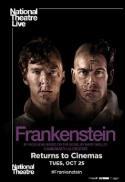
NT LIVE: FRANKENSTEIN w/ Miller as Creature
This content is not recommended for anyone under the age of 17 due to adult themes and could include very strong language, intense violence, nudity, graphic sex scenes/dialogue and drug use.
Frankenstein returns to international cinemas to mark the 200th anniversary of Mary Shelley’s most famous novel. Captured live in 2011 from the National Theatre stage in London, this thrilling, sold-out production became an international sensation, experienced by almost half a million people in cinemas around the world. Directed by Academy Award®-winner Danny Boyle (Trainspotting, Slumdog Millionaire), Frankenstein features Benedict Cumberbatch (Hamlet, BBC’s Sherlock) and Jonny Lee Miller (Elementary, Trainspotting) alternating between the roles of Victor Frankenstein and his creation. Childlike in his innocence but grotesque in form, Frankenstein’s bewildered creature is cast out into a hostile universe by his horror-struck maker. Meeting with cruelty wherever he goes, the increasingly desperate and vengeful Creature determines to track down his creator and strike a terrifying deal. Scientific responsibility, parental neglect, cognitive development and the nature of good and evil, are embedded within this thrilling and deeply disturbing classic tale.
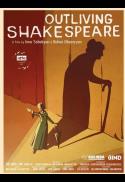
Outliving Shakespeare
“To be or not to be?” echoes through the halls of a derelict Soviet-era retirement home, where a group of its elderly residents rehearse Shakespeare’s Sins—an original play in which the renowned playwright's own characters confront him over their tragic fates. From casting to premiere night, Outliving Shakespeare follows the retired theater troupe bonding in and between rehearsals, transforming from a lighthearted warm look at the innocent dignity of aging, into a deeper thought-provoking exploration of the loneliness that accompanies it. As the production unfolds, the theatre mirrors reality.
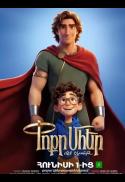
Poqr Mher
The first Armenian feature-length animated film created with artificial intelligence. After remaining sealed for centuries, the gates of Agravakar suddenly open, bringing Pokr Mher into the modern world. But in this unfamiliar age, his legendary strength is fading, and humanity’s belief in heroes has nearly disappeared. To reclaim his power, Mher must awaken courage in the hearts of a group of ordinary children—children who never imagined that the world might need a hero again, or that the greatest heroic power could already be hidden within themselves.

Purple NYE With PURPLE RAIN And Sign "O" The Times
The VOGUE Theatre Presents ~ A Very Purple New Years Eve! 3rd Annual NYE Party! Featuring A 4K Restoration Of PURPLE RAIN And Concert Film ~ Sign ☮️ The Times Thursday December 31 New Years Eve! Doors Open At 9:00pm Purple Music Videos, Before The Film! Purple Rain Starting At 10:00pm Midnight Countdown With Complimentary Champagne Toast* And Party Favors! Then Right Into Sign ☮️ The Times, Keeping The Party Going! Tickets Are Just $25- And All Ages Welcome! Purple Rain ~ "The Kid" (Prince) is a troubled Minneapolis musician. He and his band, The Revolution are one of three acts playing at a local nightclub, the First Avenue. The other acts are The Time, a funk band, lead by Morris Day and The Modernaires, a new wave band, lead by Dez Dickerson. Aspiring singer Apollonia, comes to town to try her luck hoping to get hired as singer at the First Avenue. Both "The Kid" and Morris Day are attracted to her and vie for her attention. While a romance starts to develop between "The Kid" and Apollonia, she accepts a position in Morris Day’s new all female group, Apollonia 6, to the obvious dismay of "The Kid". Will The Kid take the top spot? Sign ☮️ The Times ~ Music legend Prince and his band perform 13 numbers, most of them from his double album, "Sign 'o' the Times." This is high-energy stuff: neon signs flash above the stage, suggesting the honky-tonk district of a big city, and between numbers there are vignettes of street life. Sheila E., Boni Boyer and Cat provide rhythmic, vocal and physical pyrotechnics while Sheena Easton appears in a film within a film, her rock video "U Got the Look." In constant motion, never far from center stage, is Prince, Minnesota's charismatic virtuoso, giving the performance of a lifetime. TICKETS ON SALE NOW! *Champagne Toast Only Available For Guests 21+ With ID Sparkling Cider Will Also Be Offered
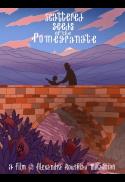
Scattered Seeds of the Pomegranate
"Scattered Seeds of the Pomegranate" is a documentary that traces the settlement of Armenians in France and Europe following the 1915 genocide. Through the eyes of director Alexandra Routhiau Mikaélian—herself of Armenian descent—the film blends previously unseen archival footage, animation, live-action imagery, and personal testimonies, taking viewers on a unique journey into "Armenian lands." It is a universal story—one of seeking refuge and the movements of the human spirit—that resonates with all the diaspora communities shaping the France and Europe of today.
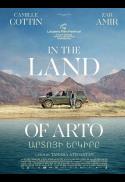
The Land of Arto
Céline arrives in Armenia for the first time to legalize the death of Arto, her husband. She discovers that he has lied to her, that he fought in the war, usurped his identity, and that his former friends consider him a deserter. A new journey begins for her, as she encounters Arto's past: invalids from the battles of 2020, veterans of the victorious battles of the 90s, hauntings from a war that never ends. A woman chases a ghost, but how do you bury it? Can the dead be saved?
Wildwood
PG-13for strong fantasy violence/bloody images, thematic material, suicide-related material, brief partial nudity and language.
Wildwood is a handcrafted epic fantasy that transports audiences into a secret, dangerously alive world. A girl’s desperate quest to save her baby brother unfolds into a spectacular, high-stakes adventure through a forbidden forest full of enchanted creatures, endearing allies, and formidable adversaries—where an entire hidden realm hangs in the balance. In an era of automation, LAIKA delivers its most ambitious and globally accessible film yet—a bold fusion of human-crafted artistry and cinematic storytelling from the makers of Coraline.