Show Times
Thursday 22, October
Friday 23, October
Saturday 24, October
Sunday 25, October
Tuesday 27, October
Wednesday 28, October
Thursday 29, October
Friday 30, October
Saturday 31, October
Sunday 1, November
Monday 2, November
Tuesday 3, November
Wednesday 4, November
Thursday 5, November
Friday 6, November
Sunday 8, November
Tuesday 10, November
Wednesday 11, November
Friday 13, November
Saturday 14, November
Sunday 15, November
Thursday 19, November
Friday 20, November
Saturday 21, November
Tuesday 24, November
Wednesday 25, November
Saturday 28, November
Sunday 29, November
16mm Cartoons: Raunchy, Sexy & Risqué
16mm Cartoons: Raunchy, Sexy & Risqué Back in the 'pre-code' era of the 1920s and early 1930s, animated cartoons were made to entertain the adults in the audience. The results were often sexually suggestive, if not borderline explicit. Much later, with the long overdue relaxation of old censorship codes, independent and experimental animators of the 1960s and beyond became free to openly explore the raunchy and risqué once more. Salacious sexiness, lustful adultery, queerness, Peeping Toms, and other questionable—or perfectly human—adult behaviors were only some of the wonderfully 'vulgar' themes present in animated shorts made in both eras. The Roxy welcomes animation archivist and historian Tommy José Stathes to showcase a curated selection of these envelope-pushing cartoons of yesteryear. This 16mm presentation includes some of the most outrageous and hilarious examples he's found over the past 25 years of collecting vintage archival prints. The screening concludes with an infamous 1920s hardcore pornographic cartoon; clearly intended for a more mature audience. Our 90 minute film program includes an intermission and will be followed by a live Q&A session with Stathes. Suggested age: 18+ Roxy Cinema hereby presents our 13th 'Peculiar Puppets' retrospective of forgotten vintage short films featuring hand puppets, ventriloquist dolls, marionettes, and stop motion creatures—all filmed in the 1930s through the 1970s. This peculiar potpourri of unnamed surprises is programmed by early animation archivist and historian Tommy José Stathes, and prints are hand-selected from his personal 16mm film archive. Warning: You may find some of the offerings to be rather unsettling, and possibly even creepy! 90-minute film presentation includes an intermission and will be followed by a live Q&A session with Stathes.
A Nightmare on Elm Street 4: The Dream Master 35mm
R
Freddy Krueger returns once again to terrorize the dreams of the remaining Dream Warriors, as well as those of a young woman who may be able to defeat him for good.

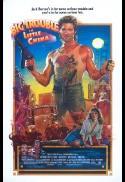
Big Trouble in Little China (35mm)
for intense sequences of fantasy violence and action throughout, frightening images, language and brief sexual material.
An All-American trucker gets dragged into a centuries-old mystical battle in Chinatown.

City Dudes
City Dudes is the new monthly “blindfolded” screening series at the Roxy Cinema New York curated and hosted by the American cinematographer Sean Price Williams and the American writer Nick Pinkerton. Might could be they’ll have the occasional Exciting Guest on-hand as well.
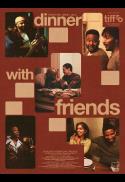
Dinner With Friends
After the parties, jobs, and hook-ups throughout their twenties and into their thirties, eight friends are trying to hold on to their group as they get older and life gets complicated. Over a series of dinners, the group deals with loyalty, loss, and an uncertain future as relationships shift and secrets are unraveled, with each dinner bringing its own dynamic shifting announcement of reconciliation, unexpected relationships, and betrayal. The city is crumbling, the climate is changing, and worries about the future of the world are making it hard for this group of friends to stay together. But they’ll come to realize everything would be much harder if they don’t.
Domestics
Sometimes people can't tell the difference between fighting and fucking. 01. Dog Cook 02. The Actress 03. Jade's Interlude 04. A Girl for Each One of My 05. The Baby 06. Dad's Trying 07. Gun Shop 08. Encore Amore 09. Emotional Businessman/Techno Lust 10. Luna Park Freestyle 11. Swim Coach 12. The Pharmacy
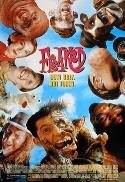
Freaked (35mm)
Ricky Coogan is a self-absorbed former child star roped into promoting a toxic chemical. Along with his best friend and a radical activist, he's ensnared by an eccentric weirdo scientist at a mutant freak farm, where they're horrifically transformed and added to a sideshow of grotesque misfits.
Full Screen: A Contemporary Music Video Showcase
FULL SCREEN: A CONTEMPORARY MUSIC VIDEO SHOWCASE 55 min screening followed by 20min Q&A A screening of 13 contemporary music videos by Gucci Mane, Mitski, Jihyo, Shenseea, Harto Fallion, Lip Critic, EXE, RADA, Kellen Kennedy, bad midi, Threshhold and Chandramathi. Followed by Q&A Presented by Hype Chateau Directors Medet Noel Paul Oliver Shore and Kevin von Puttkammer Dallae C Jasmine Johnson Colter Fellows NikGL2 Jacob Ace Aguilar Gabi Benak Reverie Reid Ackerman Cast Gucci Mane Mitski Jihyo Shenseea Harto Fallion RADA Lip Critic EXE Chandramathi Kellen Kennedy black midi Reverie Cicada
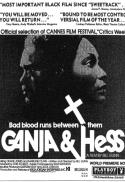
Ganja & Hess
Ganja & Hess is a 1973 experimental horror film written and directed by Bill Gunn and starring Marlene Clark and Duane Jones. The film follows the exploits of anthropologist Dr. Hess Green (Jones) who becomes a vampire after being stabbed by his intelligent, but unstable, assistant (Gunn) with an ancient cursed dagger. Green falls in love with his assistant's widow, Ganja (Clark), who learns Green's dark secret.
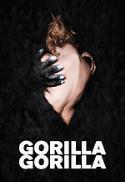
Gorilla Gorilla
After her divisive debut feature, Anne, an up-and-coming filmmaker, sets out to make her sophomore film, In Memory of Anne Heche. However things quickly take a turn for the worse as scenes go awry, actors drop out, and Anne’s prickly friendship with her lead actress becomes increasingly toxic.
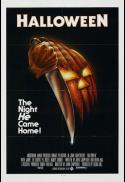
Halloween (1978)
R
Credited, rightfully, as the film that kickstarted the “slasher” subgenre, Carpenter’s 1978 Halloween is a masterwork of building tension, an exercise in mood and suspense that takes its cues from Hitchcock, unlike most of the 80s gorefests it would inspire. The film’s key innovation – besides the indelibly terrifying image of the blank-faced “shape” aka Michael Myers – is setting it in an innocuous American suburb; there’s nowhere, not even a nice middle class home, where the viewer is safe. Jamie Lee Curtis makes her scream queen debut as one of several babysitters being stalked by a masked, escaped mental patient on Halloween night, her only savior being the patient’s maniacally driven doctor, played with gusto by the great Donald Pleasance. But the secret weapon of Halloween is the score – composed by Carpenter himself – a tinkling, off-meter piano figure that continues to haunt long after the final unsettling frame. A Halloween season perennial.
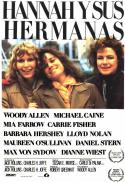
Hannah And Her Sisters (35mm)
Three successive family Thanksgiving dinners mark time for Hannah (Mia Farrow), her younger sisters Lee (Barbara Hershey) and Holly (Dianne Wiest) and the men in their lives. Lee is having an affair with Hannah's husband, Elliot (Michael Caine), and trying to end her Svengali-like romance with artist Frederick (Max von Sydow). Holly is frustrated by her lack of career fulfillment and her increasing dependence on Hannah's largesse, while being courted by the hypochondriac Mickey (Woody Allen).
Harakiri, I Miss You
Three young friends wander through Madrid over 24 hours, tangled in rivalry and fragile masculinity. Obsessed with an older woman who teases and rejects them, they face encounters that push them to the edge—a raw portrait of youth lost between desire and emotional violence.
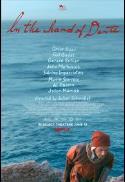
In the Hand of Dante
Rfor violence, language and sexual references.
In the Hand of Dante follows the parallel lives of a New York author (Nick Tosches) in the 21st century who embarks on a violent journey after he is recruited by a mafia don to steal Italian poet Dante Alighieri’s The Divine Comedy written in the poet’s own hand, and Dante in the 14th century seeking inspiration to write his most important work – each man unknowingly connected through time and their obsessive quest for love, beauty, and the divine.
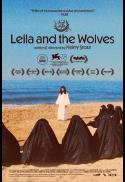
Leila and the Wolves
Drawing on the Arab heritage of the ‘Arabian Nights’, Leila and the Wolves combines fictional drama, archival footage, fantasy sequences, mosaic pattern, to refute the colonial and male dominated version of history. Leila travels across time and space to explore the collective memory of Arab women in Palestine and Lebanon and their hidden role in historical events.
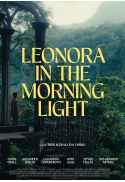
Leonora in the Morning Light
In the early 1930s, painter Leonora Carrington, a rebel against social expectations, joins the surrealist movement and its iconic figures like André Breton and Salvador Dalí in Paris. A whirlwind love affair with artist Max Ernst confronts her with her inner demons. During the war, Leonora flees to Mexico and finally empowers herself. Today Leonora Carrington is one of the highest selling female painters worldwide, next to Frida Kahlo and Georgia O’Keeffe.

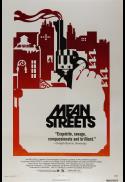
Mean Streets (35mm)
R
The film that put Martin Scorsese on the map, 1973’s Mean Streets sees the director finding his voice, establishing the vernacular for future street-level crime films and starting a thematic through-line that leads to his 1990 gangster masterpiece Goodfellas. A story about a young street hood (Harvey Keitel) wrestling his Mafia aspirations against his deeply entrenched Catholicism while trying to keep his volatile buddy (Robert De Niro) out of trouble, Mean Streets feels authentic and deeply personal, clearly drawn from Scorsese’s Little Italy upbringing. Even more remarkable is the maturity of the filmmaking; nary a word is wasted, no moment without meaning, a clarity of vision aided by flawless, character-rich performances and a gritty, transformative execution. With David Proval and Amy Robinson.
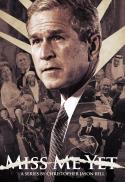
Miss Me Yet
A ten-part archival documentary series that explores life under the George W. Bush presidency. "Undeniably compelling." - Drew Gillis, The AV Club A selection of episodes will be screened followed by a discussion with political commentator/comedian Sam Seder. Seder cohosted an earlier edition of his show The Majority Report in 2004 alongside actress/comedian Janeane Garofalo. The discussion will reach back to the era of the Patriot Act, the Iraq War, what it was like to be skeptical of the direction of America under the George W. Bush admin... and the repercussions of it today.
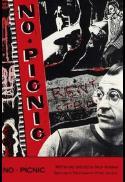
No Picnic (4k Restoration)
Philip Hartman’s priceless artifact of New York’s pre-gentrification East Village follows down-and-out jukebox operator Macabee Cohn, played with deadpan melancholy by David Brisbin, who wanders the cheap tenements, dive bars, and derelict streets of the East Village in search of a mysterious woman in a striped dress. NO PICNIC premiered at the 1986 Sundance Film Festival, where Peter Hutton won the Best Cinematography prize for his gorgeously evocative black-and-white imagery, working with producer Doris Kornish, Emmy Award–winning director Mike Spiller as assistant cameraman, animator Lewis Klahr as boom operator, Christine Vachon as assistant sound editor, with assistance from, among other notables, Jacob Burckhardt and Jeff Preiss. Scored by Ned Sublette, the soundtrack features The Raunch Hands, Fela Kuti, Charles Mingus and Student Teachers.
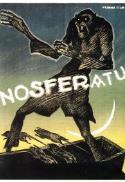
On the Relentless Destruction of Beauty
On The Relentless Destruction of Beauty features artist studios, communized parks, and residential buildings as spaces produced through—and for—collective creativity, labor, and cohabitation. Spanning the 1960s to the present, the program traces the ways everyday acts of living and making come into conflict with capital’s logic of private property, which seeks to empty such spaces of life in the pursuit of profit. Across these four films, however, the home emerges not as a commodity to be exchanged—nor as an asset to be valued through speculation and dispossession—but as a site of ongoing creative struggle.
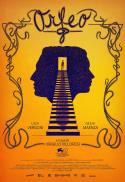
Orfeo
In the classic Greek tragedy, a snake bites Eurydice on her wedding day, and her new husband, Orpheus, travels to the Underworld to bring her back. Virgilio Villoresi's expressionistic adaptation of the tale is based on Dino Buzzati's 1969 Poema a fumetti, Italy' s first graphic novel. The film is a modern reimagining with an aesthetic untethered from reality: a kaleidoscopic journey through time and place, reflecting on art, love, mystery, eroticism, melancholy, life, and death.
Peregrine Falcon
Two young female serial killers take refuge in an abandoned warehouse to plot their next move. As one struggles with her role as the de facto leader, the other strives to prove her devotion as a follower.
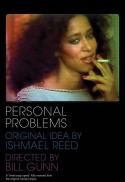
Personal Problems
This entirely African American-conceived and produced ensemble drama is the result of a collaboration of a pair of pioneering Black artists: writer Ishmael Reed and filmmaker Bill Gunn, who wrote and directed the underground classic Ganja & Hess and wrote the screenplay for Hal Ashby's The Landlord. Originally intended to air on public television in 1980, it went unseen for decades; the original tapes have been carefully restored by Kino Lorber and the film is now available in its full-length version for the very first time!
Primetime
Rfor disturbing sexual material, graphic nudity, some violent content, and language.
In 2006, To Catch a Predator host Chris Hansen sets out to make television history.
Salome Learns to Dance
A punk tour de force through an actor’s sex dreams as she grapples with her character’s eroticism. The filmmaker plays everyone, including a dog, and wears gender and nudity as a costume—a whole new meaning to “go f**k yourself.” Atom Egoyan calls it: “A stunning hall of mirrors about identity, sex and art. This is a unique film full of incredible performances by ONE brilliant actress with truly impressive range. A major achievement.”
Silent Night, Deadly Night 5: The Toy Maker (35mm)
Rfor strong sensuality and violence
A young boy sees his father killed by a toy that was anonymously delivered to his house. After that, he is too traumatized to speak, and his mother must deal with both him and the loss of her husband. Meanwhile, a toy maker named Joe Peto builds some suspicious-looking toys, and a mysterious man creeps around both the toy store and the boy's house...but who is responsible for the killer toys?
Society (35mm)
An ordinary teenage boy discovers his family is part of a gruesome orgy cult for the social elite.
Suspiria (1977)
R
Both the pinnacle of his career and the giallo subgenre, Dario Argento's Suspiria ranks in the pantheon of the greatest horror movies of all time, and with damn good reason. Masterfully employing dream logic (the script was co-written by then wife Daria Nicolodi) and gloriously garish lighting techniques, the film is a true modern fairy tale that tells the story of a ballet student (Jessica Harper) who transfers to a German dance academy only to find it is run by a coven of murderous witches. Argento's command of shock and suspense is on full display in every blood-soaked scene, but the true secret weapon of Suspiria is the unbelievably scary and propulsive score by the prog rock band Goblin. It all adds up to that rare witches brew: the perfect horror experience.
Tár
Rfor some language and brief nudity.
From writer-producer-director Todd Field comes TÁR, starring Cate Blanchett as Lydia Tár, the groundbreaking conductor of a major German Orchestra. We meet Tár at the height of her career, as she’s preparing both a book launch and a much-anticipated live performance of Mahler’s Fifth Symphony. Over the ensuing weeks, her life unravels in a singularly modern way. The result is a searing examination of power and its impact and durability in today’s society.
Taste of Cherry (Cinema Tehran)
Winner of the Palme d’Or at the 1997 Cannes Film Festival, Iranian auteur Abbas Kiarostami’s _Taste of Cherry_ is an emotionally complex meditation on life and death. Middle-aged Mr. Badii (Homayoun Ershadi) drives through the hilly outskirts of Tehran—searching for someone to rescue or bury him.
The Downtown Festival: Chronicles of Shpongle
The film follows a group of religious harvesters in a forgotten mythological underworld hidden behind closed doors in contemporary New York City as they harvest a mind-altering fungus called "Shpongle" that links users to a fantastical world.
The Downtown Festival: Two Neighbors
TWO NEIGHBORS, a film by Ondine Viñao North American Premiere Screening followed by a conversation between director Ondine Viñao, cast members, moderated by SPECIAL GUEST Inspired by Aesop’s fable Avaricious and Envious and the viral 4chan meme archetypes of Stacy, Becky, Chad, and the Virgin. Becky, an ambitious but struggling writer, is overcome by envy and spite when she meets Stacy, a beautiful but insatiable socialite, at a lavish party hosted by Stacy’s father at their country estate. The evening descends slowly into chaos, and the girls’ lives are forever transformed after the unexpected arrival of a modern-day genie who promises to grant their deepest, darkest wishes.
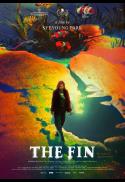
The Fin
In the dystopian post-war ”United Korea,” mutated mermen called Omegas are society’s outcasts–-exploited as cheap labor in an ecologically decimated, water-poor landscape. As one of these pariahs dies of over-exertion, he tasks a colleague (Goh-woo) with finding his daughter Mia (Yeon Yeji) hiding among humans, so she may receive his fin in a rite of passing. Meanwhile, Sujin (Kim Pureum), a young civil servant, begins doubting the state’s ideology as she pursues the Omega for her own purposes. With The Fin, director Park Syeyoung (The Fifth Thoracic Vertebra) emerges with a unique eye for artful, experimental genre cinema. This vision of societal collapse unfolds as a formalist’s fever dream pitched between Guy Maddin and Konstantin Lopushansky, pushing the boundaries of digital cinema with expressionistic, richly saturated images, capturing the contours of post-industrial decay, in an impressive feat of worldbuilding. A potent critique of xenophobia and South Korea’s reckless economic growth despite dawning ecological, economic and geopolitical challenges, The Fin reinvigorates South Korean independent cinema, light years ahead of its more formulaic tendencies.
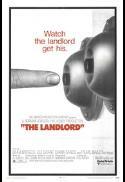
The Landlord (35mm)
PG
At the age of twenty-nine, Elgar Enders "runs away" from home. This running away consists of buying a building in a black ghetto in the Park Slope section of Brooklyn. Initially, his intention is to evict the black tenants and convert the building into a posh flat. But Elgar is not one to be bound by yesterday's urges, and soon he has other thoughts on his mind.
The Texas Chainsaw Massacre - 35MM
R
En route to visit their grandfather's grave (which has apparently been ritualistically desecrated), five teenagers drive past a slaughterhouse, pick up (and quickly drop) a sinister hitch-hiker, eat some delicious home-cured meat at a roadside gas station, before ending up at the old family home... where they're plunged into a never-ending nightmare as they meet a family of cannibals who more than make up in power tools what they lack in social skills...
Tickled (10th Anniversary)
RRated R for language
Webworm Presents: Tickled's 10 Year Anniversary It's been 10 years since Tickled came out, and director David Farrier is bringing his documentary back to where the story started: New York. Two screenings, each featuring a unique post-film Q&A with Farrier and guests from the world of Tickled. What's happened since the film premiered at Sundance in 2016? What happened with those lawsuits? What happened to those millions of tickling dollars? Come join us, as Tickled turns 10.
Tracks (4K Restoration)
A sergeant, returned from Vietnam to accompany a comrade’s body for burial, is crossing America by train. Haunted by hallucinations of terror, the soldier becomes involved with various passengers, actual and imagined.
Tripolar The Movie
TRIPOLAR THE MOVIE is a biting satire disguised as a stoner comedy set in the heart of Brooklyn. Rife with John Waters-style humor, the story follows a washed-up 50-something mother and her daughter's 20-something friends who are willing to do anything to make a film. But when a movie exec greenlights their project, they begin to conspire against one another in a parody of life in modern America. As Hunter S. Thompson said: “When the going gets weird, the weird turn professional.” Winner, Best Narrative Feature at the 2025 Chicago Underground Film Festival and called “…the best film at BAFICI, possibly of the year" by BAFICI programmer Agustín Masaedo. NY Premiere.

Vampyr + Live Score
Vampyr -- Live Score by the Andrew Alden Ensemble With Vampyr, Danish filmmaker Carl Theodor Dreyer's brilliance at achieving mesmerizing atmosphere and austere, profoundly unsettling imagery (The Passion of Joan of Arc and Day of Wrath) was for once applied to the horror genre. Yet the result—concerning an occult student assailed by various supernatural haunts and local evildoers in a village outside Paris—is nearly unclassifiable, a host of stunning camera and editing tricks and densely layered sounds creating a mood of dreamlike terror. With its roiling fogs, ominous scythes, and foreboding echoes, Vampyr is one of cinema's great nightmares.
You Can See Everything
Rfor language and some graphic nudity.
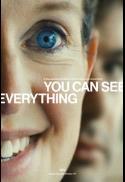
Thirty-four days before she’s sent to prison, notorious Silicon Valley founder Elizabeth Holmes invites a skeptical film crew to document her every move. What begins as an intimate portrait of an enigmatic felon becomes a mind-bending three-year journey into the abyss. From boundary-pushing directors Nathan Fielder and Lance Oppenheim comes You Can See Everything.